Fiber vs microwave backup: which to choose for your business?
Choosing between fiber vs microwave backup is critical for uptime. Smartnett ensures 99.999% SLA with 96-hour installation to keep your enterprise online.

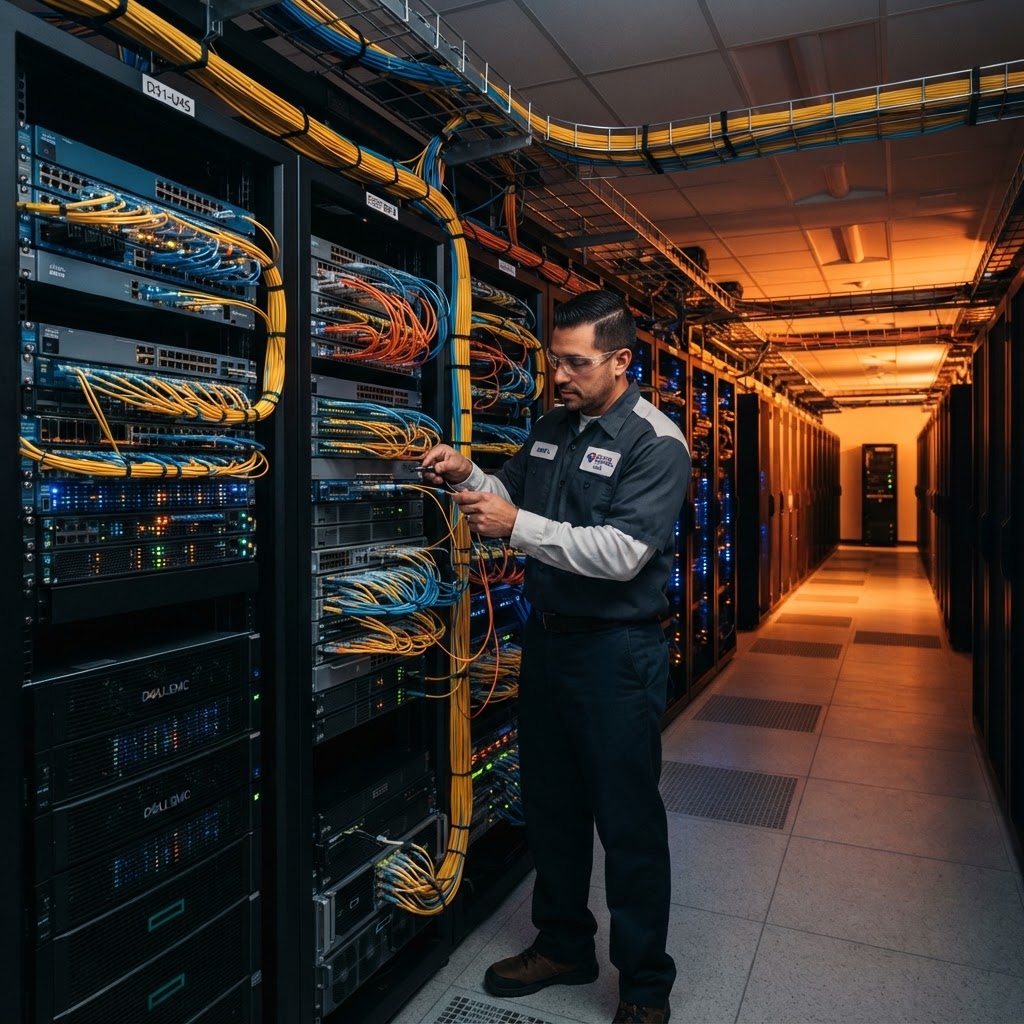
When evaluating network resilience, the debate between fiber vs microwave backup remains central for US enterprises managing high-stakes data operations. Maintaining dedicated internet access is non-negotiable for sectors subject to HIPAA, PCI-DSS, or SOC 2 compliance, where even momentary downtime can trigger regulatory penalties. Smartnett provides robust solutions leveraging a 53,100 km backbone and 220 PoPs to ensure mission-critical business internet connectivity. Whether deploying fiber for primary capacity or microwave as a high-speed redundancy, organizations must align their choice with specific geographical and operational requirements. ## Why fiber vs microwave backup is critical for enterprise uptime Maintaining continuous operations requires a strategy that goes beyond simple business internet. The choice in a fiber vs microwave backup scenario often dictates recovery time objectives (RTO). Fiber provides the gold standard in symmetric internet with massive scale, while microwave offers a rapid-deployment alternative that bypasses traditional trenching hurdles. For data centers and multi-site headquarters, combining these technologies within an SD-WAN architecture creates a resilient fabric capable of automatic failover. This ensures that dedicated bandwidth remains available even during physical cable cuts. ## Technical comparison of fiber vs microwave backup architectures | Feature | Fiber Optic | Microwave (Millimeter Wave) | | :--- | :--- | :--- | | Latency | 2-8 ms | 1-5 ms | | Deployment Time | 30-90 Days | 96 Hours (Smartnett) | | Sensitivity | Dig-up risks | Atmospheric conditions | | Capacity | Up to 10 Gbps | Up to 2 Gbps | | Reliability | Extremely High | High (Line of Sight required) | ## Leveraging SD-WAN for seamless network redundancy Utilizing SD-WAN is essential for modern enterprises to manage fiber vs microwave backup deployments effectively. By intelligently routing traffic, SD-WAN allows the network to prioritize sensitive data over the primary fiber link while utilizing microwave as a dynamic failover path. This prevents packet loss during transition periods, maintaining a stable flow of dedicated bandwidth across your enterprise network. Smartnett’s managed SD-WAN solutions integrate directly with our 220 PoPs to provide a carrier-grade experience across the US–LATAM corridor. ## The role of dedicated internet access in compliance Environments governed by SOC 2 or HIPAA demand consistent uptime. When businesses rely solely on standard business internet, they risk performance degradation. Dedicated internet access from Smartnett provides a 1:1 contention ratio, ensuring that your connection is never shared. When comparing fiber vs microwave backup, the priority must be to maintain this dedicated level of service during a failover event, ensuring that sensitive data remains encrypted and accessible without latency spikes that could trigger a compliance alert. ## How geography impacts fiber vs microwave backup selection Choosing between these technologies often comes down to the physical "last mile" environment. In densely populated urban areas, fiber is usually readily available, but in remote industrial sites or areas prone to construction, microwave backup offers a faster, more reliable path to connectivity. Our 96-hour installation timeframe for microwave solutions ensures that enterprises are not left vulnerable while waiting for complex trenching permits or utility construction. ### What is the primary difference in installation time? Fiber requires physical cabling, which can take months due to municipal permits. Microwave requires only line-of-sight and can be provisioned in as little as 96 hours. ### Does microwave backup meet SOC 2 security standards? Yes, when configured with end-to-end encryption and integrated into a managed SD-WAN, microwave links maintain the same high security standards as fiber. ### Can I combine both for maximum redundancy? Yes, using a multi-carrier approach with both fiber and microwave as a backup provides the highest level of network availability, approaching 99.999% SLA. ### Is microwave latency comparable to fiber? Yes, microwave often offers lower latency than fiber over the same distance because signals travel faster through the air than through glass, provided there is a clear line of sight. ## Smartnett infrastructure advantages for US enterprises Smartnett supports the most demanding US operations through a vast 53,100 km backbone. Our network features: 1. 16 international connections ensuring global reach. 2. 400 Gbps international capacity for high-throughput needs. 3. 24/7 NOC support ensuring immediate incident resolution. 4. Fixed public IP availability for all dedicated internet segments. 5. Seamless cross-border connectivity for firms with operations spanning the US and Latin America. ## Conclusion The decision regarding fiber vs microwave backup is a foundational element of your disaster recovery plan. By focusing on low-latency paths and high-availability architecture, your organization can survive unforeseen outages. - Prioritize dedicated internet access for all critical core services. - Implement SD-WAN to automate the failover process between primary fiber and microwave links. - Request a feasibility study for exact pricing based on your specific site requirements.
Written by
Eng. Roberto Mendoza Carrillo
Network Engineering — Smartnett
Telecommunications Engineer (UPIICSA-IPN). 12 years designing SD-WAN architectures and dedicated links for corporate clients in Mexico. Cisco CCNP and MikroTik MTCRE certified.