Dedicated fiber vs microwave: which is right for you?
Deciding between dedicated fiber and microwave for your business connectivity? Learn the differences in latency, speed, and reliability to choose the best path for your network.
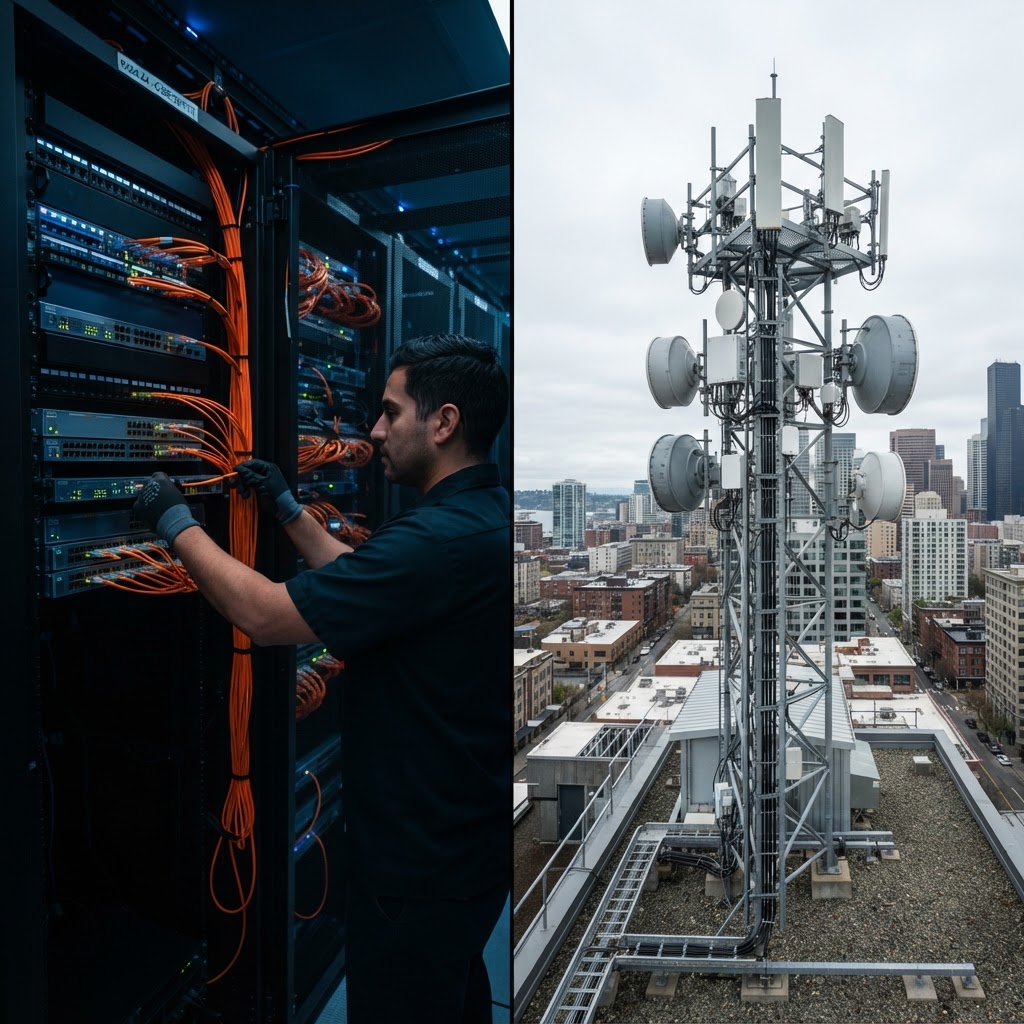
When it comes to powering your enterprise with reliable, high-performance connectivity, choosing between dedicated fiber and microwave technology is a critical decision. Both options provide dedicated internet access, meaning your connection is not shared with residential users or other businesses, ensuring consistent throughput. However, the underlying infrastructure differs significantly. Business internet reliability is the lifeblood of modern operations, and understanding how these two technologies stack up against your specific needs is essential. Dedicated internet is often the cornerstone of digital transformation, and at Smartnett, we believe every business deserves a solution that matches their pace. Comparing Dedicated Fiber vs. Microwave Latency and Capacity Fiber optic technology delivers data via pulses of light through glass strands, offering unmatched capacity and near-zero latency. It is the gold standard for high-bandwidth applications. Microwave, on the other hand, transmits data through the air using radio waves. While it is incredibly fast and often rivals fiber in latency, it is susceptible to physical obstructions. Weather Resilience and Deployment Speed Fiber is physically robust once buried but requires lengthy trenching and permitting, often taking weeks or months to deploy. Microwave offers a distinct advantage in deployment speed; since it requires line-of-sight equipment rather than digging, it can be installed in a fraction of the time. Smartnett offers a 96-hour install for microwave solutions, keeping your business running without the wait. When to Use Each and Why Redundancy Matters If your primary concern is massive, symmetrical throughput for data-heavy cloud tasks, dedicated bandwidth over fiber is the logical choice. If your office location is in a high-density area where digging is prohibited, or you need immediate connectivity, microwave is superior. However, the smartest approach is often leveraging both. By deploying fiber as your primary connection and microwave as a backup, you achieve active redundancy. If the fiber line is cut, the microwave link kicks in instantly, ensuring your dedicated bandwidth is never compromised. Smartnett specializes in this hybrid approach, providing fiber+microwave simultaneous connectivity to guarantee 99.999% uptime. Comparison Table | Feature | Dedicated Fiber | Microwave | | --- | --- | --- | | Latency | Ultra-Low | Low | | Bandwidth | Virtually Unlimited | High (GIG+) | | Deployment | Slow (Permits Required) | Fast (96-hour install) | | Weather Impact | Immune | Potential Rain Fade | | Installation | Digging Required | Line-of-Sight Only | ### FAQ Frequently Asked Questions ### How does rain impact microwave connectivity? While heavy precipitation can cause signal attenuation (rain fade), modern microwave equipment utilizes adaptive modulation to maintain connectivity. ### Is dedicated fiber more secure than microwave? Both are secure, but fiber is physically harder to intercept, while microwave requires encrypted links to ensure data privacy. ### How fast can Smartnett deploy my business internet? Smartnett offers a rapid 96-hour installation timeframe for microwave, ensuring your business stays connected without long wait times. ### Can I combine both for maximum uptime? Yes, running both simultaneously is the gold standard for active redundancy, ensuring your business internet remains active even if one path is severed. Conclusion Choosing between fiber and microwave depends on your physical location, budget, and risk tolerance. For most growing enterprises, the best strategy involves: - Prioritizing dedicated internet access for mission-critical apps. - Utilizing fiber for high-capacity, heavy-duty data transfers. - Implementing microwave as an immediate deployment or failover solution. - Partnering with providers like Smartnett that offer fiber+microwave simultaneous configurations for total reliability.
Written by
Eng. Roberto Mendoza Carrillo
Network Engineering — Smartnett
Telecommunications Engineer (UPIICSA-IPN). 12 years designing SD-WAN architectures and dedicated links for corporate clients in Mexico. Cisco CCNP and MikroTik MTCRE certified.